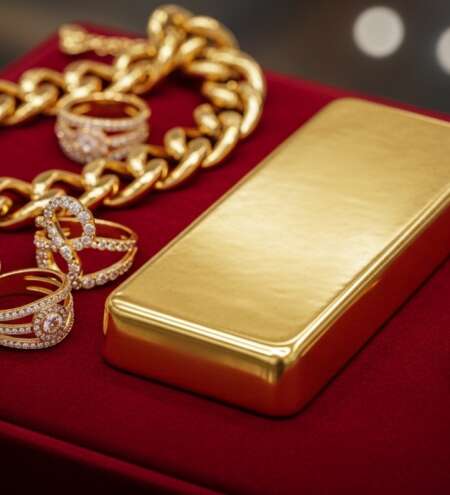
Gold dinar vs gold bar is one of the first questions new gold buyers in Malaysia ask, and the honest answer is: it depends on your goal.
If you have decided to put some money into physical gold, the next question is usually which form to buy. In Malaysia, two of the most common choices are the gold dinar and the standard gold bar. Both are legitimate ways to hold gold, but they serve slightly different purposes. The right pick depends on what you actually want out of it.
What Makes the Gold Dinar Different
A gold dinar is a coin minted to a historical Islamic standard, typically 4.25 grams of 22-karat gold. Its appeal goes beyond the metal itself. For many Muslim buyers, the dinar carries religious and cultural weight as the currency referenced in classical Islamic texts. Buyers often choose it specifically to fulfil zakat obligations, or simply as a store of value rooted in that tradition.
Because of the coin format, dinars are easy to divide, gift, or use in smaller transactions compared to a single large bar. The trade-off: coins usually carry a higher premium over the spot gold price than bars do. Minting and certifying coins simply costs more per gram.
What Makes the Gold Bar Different
A gold bar, or jongkong emas, sits closer to the pure spot value of gold, since less craftsmanship goes into it. Larger bars (10g, 20g, 50g, 100g and above) generally carry a lower premium per gram than smaller bars or coins. That makes them more efficient if your main goal is maximising exposure to the gold price itself.
Bars are also the more familiar format for buyback at gold shops and dealers across Malaysia. Liquidity tends to be straightforward, as long as you keep the original certificate and packaging intact.
Comparing the Two
- Premium over spot price: Gold bars, especially larger sizes, usually cost less above spot than dinars.
- Religious and cultural value: The dinar has a clear edge here, particularly for zakat and Islamic finance purposes.
- Divisibility: Dinars are easier to use in smaller units; bars are better suited to lump-sum investment.
- Resale: Both are widely accepted by reputable dealers in Malaysia, though bars are marginally more standardised.
Which Should You Choose?
Is your priority investment efficiency, and getting as close to the spot gold price as possible? A gold bar is usually the better choice. Does religious significance, zakat payment, or the tradition behind the dinar matter to you? Then the dinar is worth its extra premium. Many buyers in Malaysia actually hold both. They use bars for the bulk of their savings, and a few dinars for specific religious or symbolic purposes.
Whichever you choose, always buy from a licensed and reputable dealer, verify purity certification, and compare live prices before committing. You can check current rates and purity options on our gold dinar guide or browse the full gold bar guide for sizes and brands available in Malaysia.
For wider market context beyond the gold dinar vs gold bar decision, global price data is tracked by the World Gold Council, the industry’s leading reference source.
Ready to Add Gold to Your Portfolio?
Open a free AurumLX account and start with certified gold bars or dinars.
Open Free AccountCheck Gold PriceFrequently Asked Questions
Which is cheaper, gold dinar or gold bar?
Can I use a gold dinar to pay zakat?
Artikel Berkaitan Dalam Siri Panduan Ini
Dinar Emas — lihat panduan lengkap →